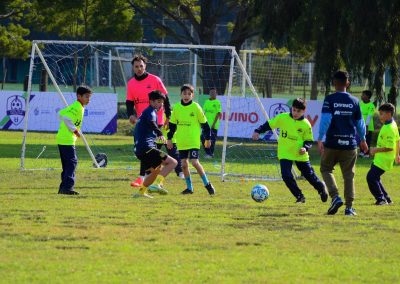

Innovative Educational Experiences
Program
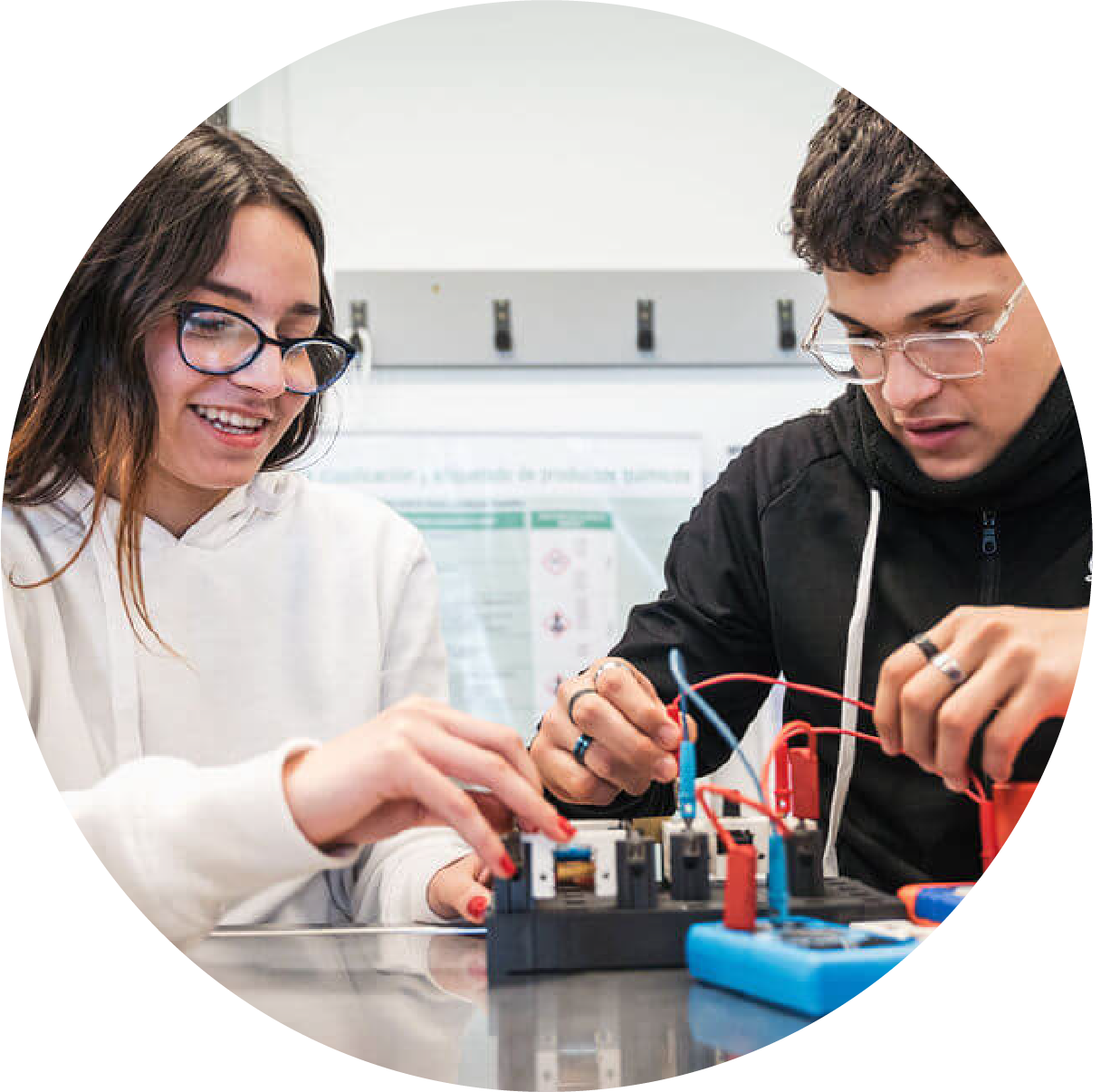
INNOVATIVE
EDUCATIONAL EXPERIENCES
The educational trajectories of children and adolescents in vulnerable contexts are strongly shaped by structural factors that affect learning, well-being, and retention within the education system. In the face of these challenges, educational innovation can be a key tool to reduce gaps and expand opportunities.
The Innovative Educational Experiences Program aims to identify, fund, and support projects that develop innovative approaches designed to improve learning outcomes and protect the educational trajectories of children and adolescents in contexts of greater vulnerability.
We understand educational innovation as the incorporation of new approaches, methods, or combinations of teaching strategies that respond to concrete educational needs. These initiatives seek to go beyond traditional practices, promoting meaningful changes in teaching and strengthening student motivation, learning, and educational continuity.
Through this program, we fund and support high-impact initiatives such as pedagogical games to develop early mathematical skills, artistic experiences that enhance learning, micro-credentials for youth from inland regions, and personalized tutoring programs aimed at preventing school disengagement.
We believe that investing in educational innovation means investing in experiences that transform educational trajectories and open up new opportunities for the future.
2026 INNOVATIVE EDUCATIONAL EXPERIENCES PROGRAM – PROJECTS:
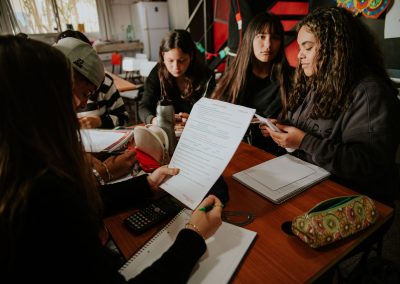
Red Tutorius – Fundación ReachingU
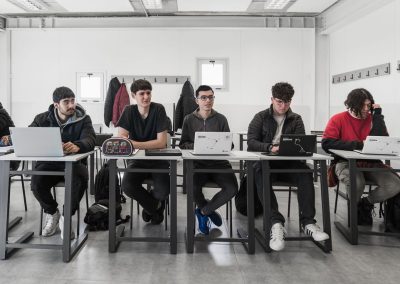
TRAMA- Universidad Tecnológica del Uruguay (Technological University of Uruguay – UTEC)
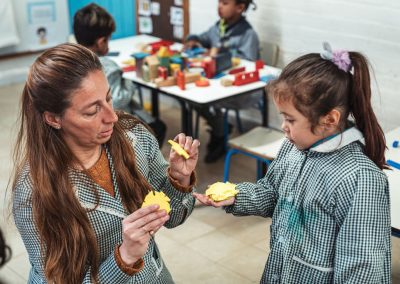
Early Mathematics – Centro Interdisciplinario en Cognición para la Enseñanza y el Aprendizaje de la Universidad de la República (Interdisciplinary Center for Cognition, Teaching and Learning – Udelar) and Sociedad Uruguaya de Ciencias Cognitivas (Uruguayan Society of Cognitive Sciences)
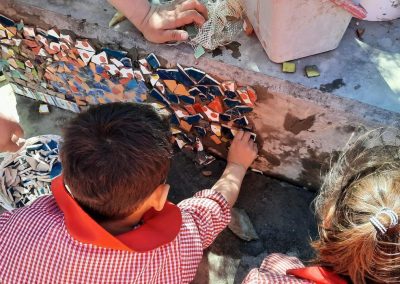
Butterflies Project – B’nai B’rith Uruguay
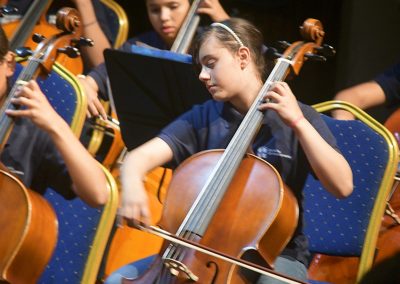
Music in Support of Educational Processes – Administración Nacional de Educación Pública (National Public Education Administration – ANEP) and Servicio Oficial de Difusión, Representaciones y Espectáculos (National Center for Performing Arts – SODRE)